
The pet care sector has shed its historical status as a modest, functional grocery aisle. Today, it stands as one of the most dynamic, recession-resistant, and high-value powerhouses in modern commerce.
As the global market scales toward nearly £148 billion, the rules of engagement are being rewritten. For retailers and brands alike, keeping pace requires understanding how consumer psychology has shifted, why point-of-sale execution has become mission-critical, and why traditional retail playbooks no longer apply.
The retail landscape shift: The rise of pet humanisation
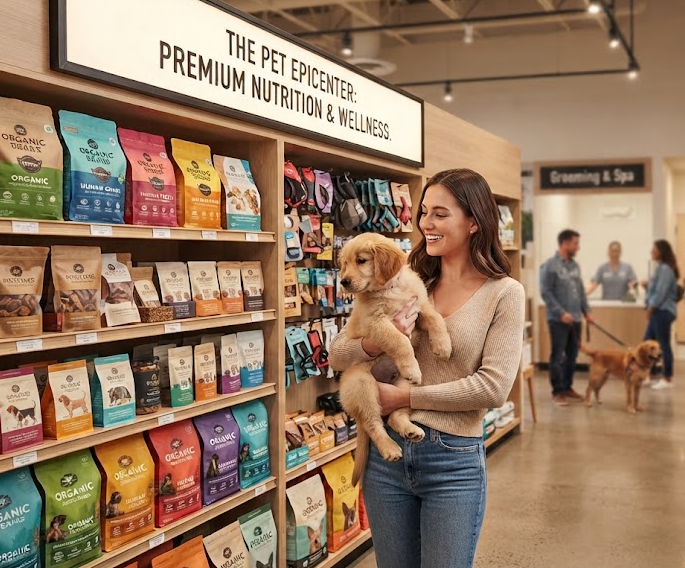
The most structural change driving the modern pet category is pet humanization – the profound psychological shift where pets are no longer viewed merely as animals, but as fully fledged family members.
Driven heavily by Millennials and Gen Z – who are reaching peak pet-ownership years often alongside delayed parenthood – this evolution has fundamentally transformed shopping behaviour:
The premiumisation wave:
Pet parents routinely trade up for human-grade ingredients, organic diets, specialized wellness supplements, and luxury accessories.
Recession resilience:
Consumer data consistently shows that pet owners rank expenditures for their pets’ health, food, and care on par with, or even above – their own discretionary spending.
The omnichannel reality:
Modern pet buyers seamlessly blend physical and digital discovery. While e-commerce drives convenience and automated subscriptions (like recurring food deliveries), physical stores remain vital hubs for immediacy, socialization, expert advice, and hands-on discovery.
Why POS is the ultimate strategic anchor
In a category defined by high SKU variety, expiration-sensitive perishables (fresh/frozen pet foods), and recurring consumption cycles, point of sale (POS) is no longer just a checkout register – it is the operational command centre.
The pet category relies heavily on consistency and personalization, making advanced POS infrastructure indispensable for several reasons:
Subscription and auto-replenishment management:
Pets eat on schedules. A dog consuming a specific 30-lb bag of grain-free kibble or a cat requiring monthly flea medication creates a predictable reorder loop. A pet-centric POS system manages automated subscriptions and customer reminders, capturing lifetime value that standard retail systems miss.
Pet-centric CRM data:
Standard retail tracks what was bought. A pet POS tracks who it was bought for – capturing pet profiles, breed, age, weight, allergies, and medical histories. This allows brands and retailers to trigger personalized marketing (e.g., automatically transitioning a puppy formula recommendation to an adult dog formula as the pet ages).
Inventory precision for perishables:
Unlike apparel or hard goods, pet food and supplements carry strict shelf-life constraints and precise stock requirements. Real-time inventory syncing across online and offline channels prevents out-of-stock frustration, which otherwise drives loyal pet parents immediately to competitors.
How the pet category differs from standard Retail
Treating the pet category like standard consumer packaged goods (CPG) or general retail is a recipe for stagnation. Pet retail operates under a distinct set of psychological and structural rules:
The proxy consumer:
The buyer is never the end-consumer. This creates a unique dual-marketing challenge: products must satisfy the human buyer’s intellectual and emotional demands (clean labels, aesthetic packaging, sustainability) while fulfilling the animal’s physical needs (palatability, tolerance, health outcomes).
High emotional stakes:
Health issues in pets cause high anxiety for their owners. Retail environments and brands that successfully position themselves as trusted advisors – offering transparency, expert guidance, and solutions rather than just commodities – win deep, long-term brand loyalty.
Service-product integration:
Unlike a bookstore or a clothing retailer, pet retail is deeply intertwined with experiential services – grooming, training, daycare, and veterinary care. The physical storefront acts as a community hub rather than just a product warehouse.
The imperative for stand-out marketing and budget allocation
Because the pet category is crowded with new entrants and premium brands, standing out on the shelf and screen requires bold marketing investment.
Brands must be willing to aggressively allocate marketing budgets toward standout campaigns for several critical reasons:
Combatting commodity traps:
When every brand claims to be “natural,” “premium,” or “vet-recommended,” baseline features blend together. Distinctive creative campaigns, emotional storytelling, and disruptive visual branding cut through the noise and capture consumer mindshare.
Experiential and sensory engagement:
Pet parents love to spoil their companions. Brands that invest in experiential marketing – such as immersive pop-ups, interactive in-store displays, high-production-value digital content, and targeted sampling programs – create memorable touchpoints that turn casual shoppers into brand advocates.
Building deep emotional resonance:
The most successful pet brands do not just sell a product; they celebrate the human-animal bond. Campaigns that tap into the joy, humour, and unconditional love of pet parenthood build a defensible moat that price-cutting competitors cannot easily erode.
The pet retail category has evolved into a sophisticated, high-expectation ecosystem.
Retailers equipped with robust, pet-aware infrastructure and brands bold enough to invest in distinctive, emotional marketing will capture the loyalty of a consumer base that views spending on their pets as an investment in family.
