
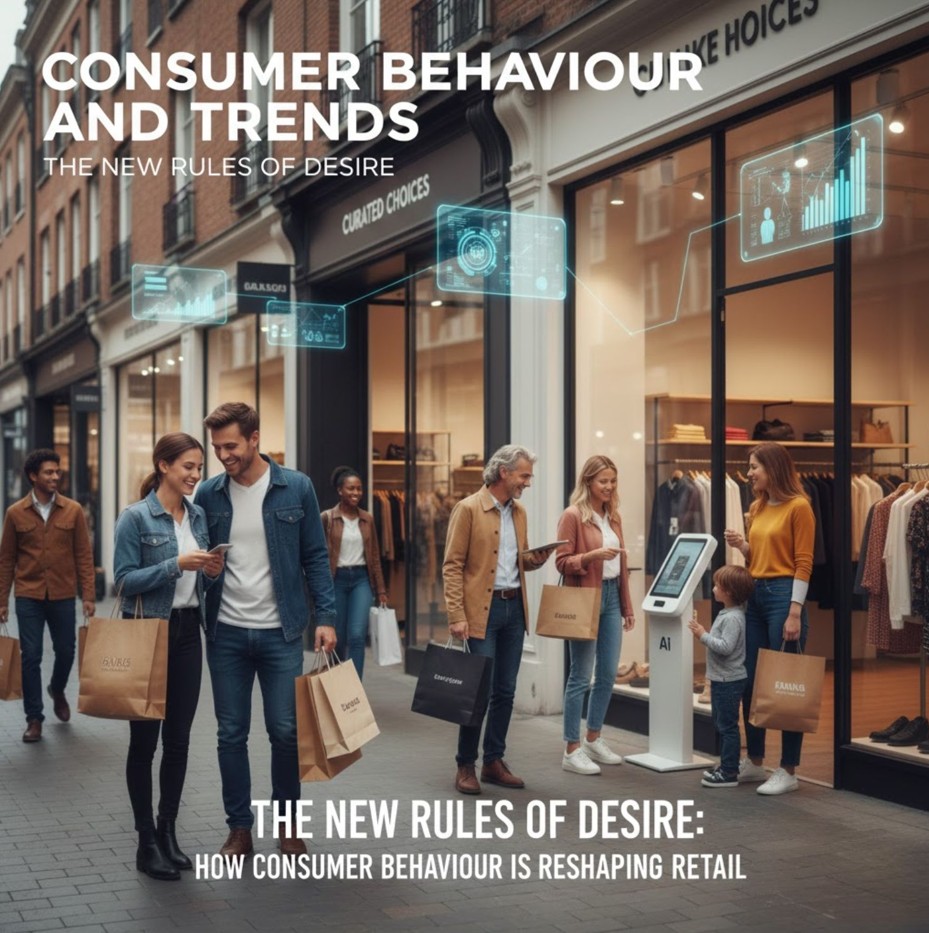
The new rules of desire: How consumer behaviour is reshaping retail
In the past, retail success was often built on one powerful idea: location, location, location. But today, in a world of always-on screens, fractured attention spans, and hyper-personalised experiences, the new retail mantra is emotion, intention, interaction.
Consumer behaviour is evolving at warp speed, reshaping not only what people buy, but why, when, and how they do it. For retail marketers and brand leaders, understanding these shifts isn’t just valuable – it’s essential for staying relevant.
Let’s unpack the key behavioural trends transforming the retail landscape in 2026.
- Intentional spending is the new impulse
Today’s consumers are increasingly values-driven. Whether it’s sustainability, ethics, or local sourcing, shoppers are aligning their purchases with their personal beliefs. The result is a shift from impulsive splurges to “conscious indulgence” – where purchases must justify themselves emotionally or morally.Key insight: Brands that can clearly communicate purpose, and embed it in the shopping experience – are seeing deeper loyalty and higher conversion rates.
- Time has become the new currency
Modern consumers don’t just want convenience – they expect frictionless speed. From same-day delivery to grab-and-go retail formats, brands must think in milliseconds.
But here’s the twist: people are also seeking intentional slowness – think pop-up experiences, sensory in-store activations, and personalised product consultations.Trend takeaway: Retailers must master both ends of the spectrum: effortless speed and curated slowness.
- Channel-neutral thinking is the default
Consumers no longer think in terms of “online” or “in-store.” To them, it’s all one seamless brand universe. They’ll discover a product on TikTok, try it in-store, order it online, and return it via locker – all without blinking.Opportunity: Retailers must kill the silo. Omnichannel isn’t a strategy, it’s the new consumer expectation.
- Experience is still everything
Retail isn’t just transactional – it’s theatrical. In an era of abundance, what surrounds the product can matter more than the product itself. Interactive displays, AR mirrors, scent marketing, and immersive storytelling are all part of the modern toolbox.Stat to watch: According to recent research, over 60% of Gen Z consumers say they’d rather spend money on experiences than products, but when retail delivers both? Magic.
- Global tastes, and local behaviours
Cultural fluidity is rising. Shoppers are exposed to global trends in real-time, but still crave localized authenticity. This dual desire is shaping everything from flavour profiles in FMCG to beauty standards and fashion fits.
Smart brands are adopting a “glocal” approach: globally recognizable, but locally resonant.
- The return of the repeat shopper
In a world overrun by one-click buying and digital ads, something interesting is happening: consumers are craving depth over breadth. Loyalty is back in fashion, but it looks different – driven less by points and more by personal relevance.Insight: Personalised offers, exclusive content, and community engagement are now the currencies of modern loyalty.
- Social proof is the real salesperson
Consumers are more likely to trust influencers, reviews, or peer recommendations than a polished ad. User-generated content, live shopping, and real-time testimonials now drive serious retail impact.
In retail today, a customer with a phone is more persuasive than a store associate.
Retail isn’t dying. It’s evolving
The “death of retail” narrative is not just tired – it’s wrong. What’s dying is the old retail: transactional, generic, and one-size-fits-all.
What’s thriving is a new ecosystem built on human insight, cultural fluency, and emotional connection.
To win in 2026 and beyond, retailers must shift their mindset from selling products to serving people – people who are more aware, more connected, and more discerning than ever.